
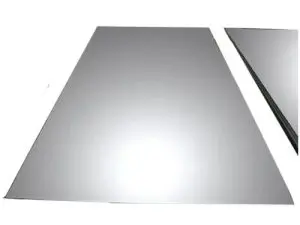
Understanding Magnesium Engineering Plate And Sheet
Magnesium Engineering Plate and Sheet refers to flat magnesium alloy stock intended for structural parts, housings, tooling, and other engineered components. Sheet generally describes thinner material and plate thicker stock, although the dividing thickness depends on the applicable specification. Buyers should identify the required thickness and tolerances rather than rely on the product name alone.
Magnesium alloys have a low density, approximately two thirds that of aluminum, which makes them attractive when reducing part mass is valuable. Their stiffness is also lower than that of steel or aluminum, so an equally shaped magnesium part may deflect more under load. Successful substitution therefore requires a design review rather than a simple material change.
Common wrought alloy families include AZ and ZK grades, with aluminum, zinc, or zirconium used to modify properties and processing behavior. AZ31 is widely discussed for sheet forming, while other grades may be selected for different strength or manufacturing requirements. Availability, temper, thickness, and properties must be confirmed with the supplier for the particular product form.
The production route affects the finished material. Rolled sheet and plate can exhibit directional properties, while cast or extruded magnesium products have different microstructures and dimensional possibilities. A drawing should distinguish flat wrought stock from a cast blank or extruded profile, because data and manufacturing assumptions for one form cannot automatically be applied to another.
Selecting Material For An Application
Begin selection with the operating loads, acceptable deflection, temperature range, fatigue exposure, and required service life. Compare properties in the relevant rolling directions and consider the effect of holes, bends, and joints. For weight reduction, evaluate the complete redesigned part: added thickness, ribs, inserts, and protective coatings can change the final mass and cost.
Typical users include component designers, contract manufacturers, equipment builders, and procurement teams working on portable equipment, transport parts, electronics housings, and industrial machinery. These applications differ in their priorities: a cover may emphasize appearance and shielding, while a loaded bracket may require documented mechanical properties and validation of fatigue performance.
Specify alloy, temper, thickness, dimensions, flatness, surface condition, and quantity on the inquiry. Include the intended forming direction, machining allowances, critical tolerances, and any special inspection requirements. If material must meet a published specification such as an applicable ASTM or EN standard, identify its full designation and revision and confirm that it covers the requested product form.
For projects that may use several magnesium product forms, Meifu Technology offers standard and customized alloy solutions, including extruded and die-cast products, forging raw materials, and machined components. Its casting, extrusion, machining, and surface treatment capabilities can support discussion of alternative manufacturing routes. Confirm availability of the required sheet or plate grade, dimensions, documentation, and delivery before specifying supply.
Machining Techniques And Safety Controls
Magnesium alloys are generally considered readily machinable, but results depend on alloy, temper, tooling, workholding, and part geometry. Sharp tools and stable setups help maintain surface finish and dimensional control. Plan the sequence around thin walls and residual stress: rough machining, controlled clamping, and a finishing pass can help limit distortion in sensitive components.
Maintain effective chip removal and avoid conditions that cause rubbing or heat buildup. Tool geometry, feed, speed, and coolant strategy should be established for the actual operation using equipment and material supplier guidance. Check the compatibility of any cutting fluid with magnesium, the machine, downstream cleaning, and the required surface treatment.
Fine magnesium chips and dust can ignite, so machining safety must cover collection, housekeeping, storage, and emergency response. Keep incompatible waste streams separate and follow the facility's fire risk assessment and local requirements. Use extinguishing media rated for combustible metal fires; water and ordinary extinguishers can intensify a magnesium fire and must not be assumed suitable.
Inspect first articles for dimensions, burrs, surface condition, and distortion after release from the fixture. Where corrosion resistance or appearance is critical, verify that cleaning removes machining residues without damaging the substrate. Record tool and process settings for repeat production, and agree on measurement methods for thin sections that can deform under inspection pressure.
Forming And Joining Methods
Magnesium's crystal structure limits some deformation mechanisms at room temperature, making forming behavior sensitive to alloy, temper, direction, and temperature. Warm forming can improve ductility for certain sheet grades, but temperature, heating time, tooling, and cooling must be validated together. Do not transfer bend limits from an aluminum design without testing the selected magnesium stock.
For bends and drawn features, evaluate bend radius, orientation relative to rolling direction, edge quality, and springback. Trial parts should be checked for cracking at the outer bend and dimensional variation after cooling. Production trials are particularly useful when the design combines tight radii, deep features, or cosmetic surfaces with narrow tolerances.
Mechanical fastening, adhesive bonding, and welding are possible joining routes, each requiring its own qualification. Fasteners offer service access but introduce holes and potential contact corrosion. Adhesives distribute load and can isolate dissimilar metals, provided surface preparation and curing are controlled. Joint design should account for peel loads, temperature, chemicals, and long-term environmental exposure.
Some magnesium alloys can be welded, but weldability and resulting properties depend on the alloy, process, filler, joint geometry, and thermal history. Cleanliness and oxide control matter, as do distortion and inspection after joining. Establish a procedure and test representative joints before production; do not assume a weld retains the base material's specified strength or corrosion behavior.
Corrosion Protection And Quality Assurance
The service environment strongly influences magnesium surface protection. Moisture, salts, trapped contamination, and contact with dissimilar metals can increase corrosion risk. Designers can reduce exposure by providing drainage, avoiding moisture traps, and isolating incompatible contacts where practical. Evaluate the entire assembly, including fasteners and cut edges, rather than treating the coating as the only protection.
Potential protection systems include conversion treatments, anodic treatments, primers, and paint or other coatings selected for the application. Their suitability depends on the alloy, preparation, environmental requirements, and applicable substance restrictions. Agree on coating coverage, thickness where relevant, adhesion, appearance, and repair procedures, then validate the complete system against the intended exposure.
A practical quality plan starts with material identification and traceability, followed by dimensional checks and inspection at the stages that affect final acceptance. Depending on risk and the purchase specification, buyers may request material certificates, mechanical test results, surface treatment records, or first article reports. Define sampling, test methods, and acceptance limits before the order is placed.
Cost Ownership And Future Development
The purchase price of Magnesium Engineering Plate and Sheet is only one part of total ownership cost. Add freight, yield loss, machining time, tooling, inspection, surface treatment, joining, and disposal of production waste. Custom dimensions or small batches may affect lead time and unit price. Compare quotations on the same alloy, temper, tolerances, documentation, and delivery terms.
Assess return on investment against a realistic alternative design. Mass reduction may lower handling effort or operating energy in some applications, but the value depends on actual duty cycles and service conditions. Include qualification expenses and potential changes to fixtures, coatings, and maintenance. A prototype and a production-volume cost model provide a stronger basis for the decision than material price alone.
Interest in lightweight equipment, improved surface protection, and more efficient manufacturing continues to drive magnesium development. Buyers should also monitor scrap segregation and recycling options, as alloy contamination and collection logistics affect recovery. New forming or joining methods should be evaluated through representative trials and supply-chain readiness rather than assumed to be immediately available for every component.
To move from concept to quotation, provide a drawing or model, estimated annual volume, operating environment, target schedule, and applicable acceptance criteria. Identify whether the project requires flat stock, a machined part, or an alternative extruded or cast component. Meifu Technologycan review the requirements against its capabilities and discuss a suitable manufacturing route, subject to confirmation of material and capacity.